Sea wall
8km walk · Old Hall Marshes and Tollesbury Wick
The sea wall cuts through Woodrolfe Road here at the Sailing Club, where a tide gate stands ready to close if the water ever rises high enough to threaten the village. It rarely needs to. But in January 1953, storm surges flooded much of the Essex coast catastrophically – and after that, the walls were raised and strengthened along the entire Blackwater estuary.
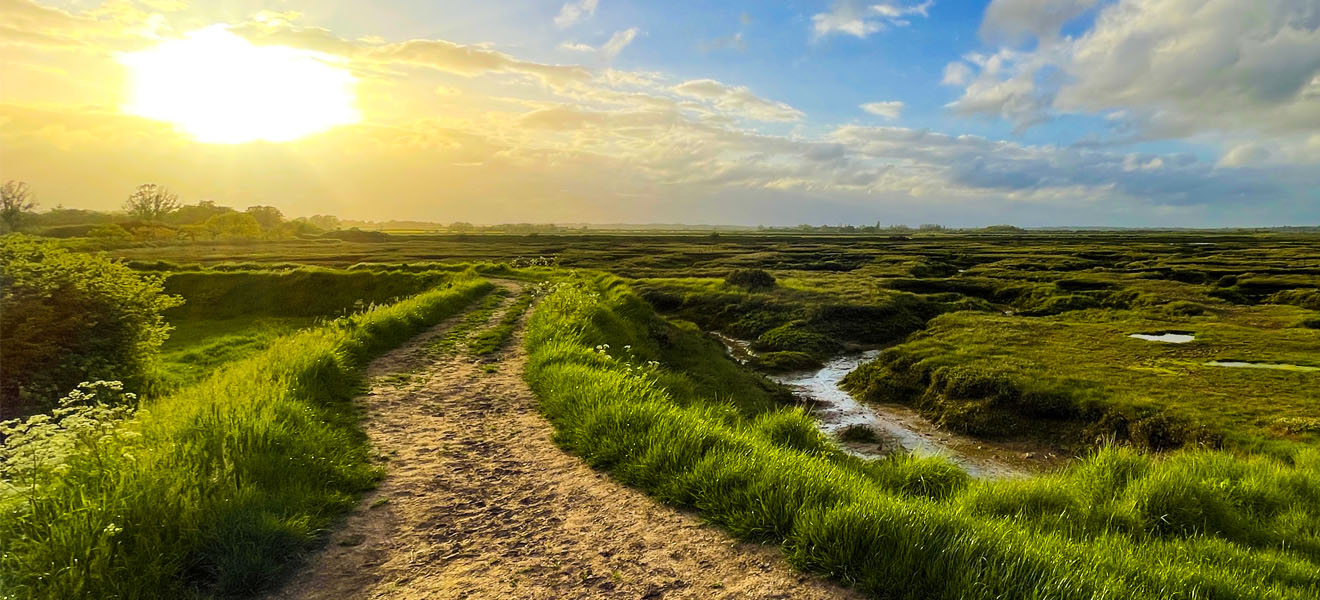
The wall you can walk from here runs in two directions. To the south-east it follows the edge of Old Hall Marshes – one of the most important bird reserves on the Essex coast, managed by the RSPB, where marsh harriers quarter the reeds and avocets breed in spring. To the south-west it curves around Tollesbury Wick, the 600-acre grazing marsh managed by the Essex Wildlife Trust, before reaching the marina and the red lightship beyond. The full circular route from here, around the sea wall and back through the village, is approximately 8 kilometres – allow three to four hours.
Running parallel to the wall on its landward side, for almost its entire length, is the borrow dyke – a long ditch dug to provide the clay material for building the wall itself. The logic is elegant and ancient: you dig your ditch, you use the spoil to build your bank, and the ditch becomes your drainage. Reed warbler, reed bunting, heron and little grebe all nest or feed in the borrow dykes today.
In 1995, a section of the sea wall was deliberately breached as part of a managed realignment scheme – allowing the tide back in to recreate the saltmarsh that centuries of reclamation had removed. The resulting habitat has since become one of the most studied examples of saltmarsh restoration in northern Europe.
The marshes on both sides of this wall have been worked since the Iron Age, when salt production was the primary industry – the red hills visible across Tollesbury Wick are the industrial waste heaps of that process, undisturbed for 2,000 years until badgers digging their sett began bringing Iron Age pottery back to the surface.
The sea wall is a public footpath. Boots recommended; the path is exposed to the elements in all seasons.