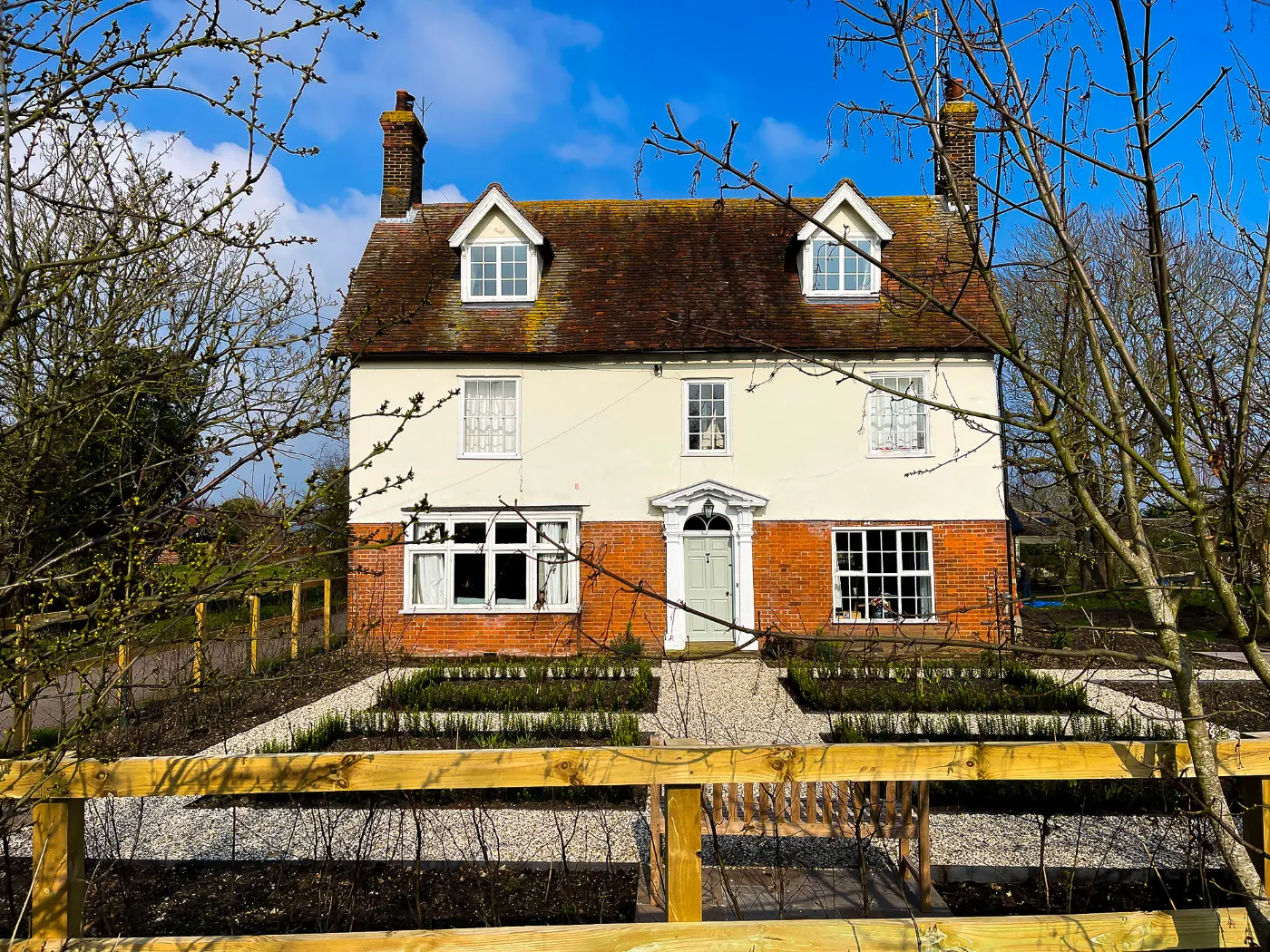
Monk’s House
A fine Georgian house, Grade II listed, and the best doorway in Tollesbury: a six-panel door beneath a fanlight of curved tracery, set in a doorcase with an open pediment. Look up at the first floor for the original sash windows, and at the chimney stack on the left return, where a recessed brick panel carries the initials and date E.M. 1792.
So why Monk’s House?
The official record notes an association with General Monck – George Monck, the soldier who marched his army south from Scotland in 1660 and engineered the return of Charles II to the throne. It's a fine story, with one problem: Monck died in 1670, and the house you're looking at was built more than a century later. If there’s a connection, it belongs to an earlier building on this site, or to the name of a family who lived here.
There’s another possibility. Before the Reformation, Tollesbury’s church and manor belonged to the Benedictine abbey at Barking, which appointed the village’s clergy right up until Henry VIII dissolved it in 1539. Monastic land, then – although the community at Barking were nuns rather than monks.
And then there are the tunnels. Village tradition holds that Monk's House is linked by a secret passage to St Mary’s church – a good half-mile away, across low, wet, clay ground barely above sea level. Every county in England has houses with this story attached; almost none of them have the tunnel. What old houses do have is cellars, drains, ice houses and blocked-up doorways, and a very human wish for something more interesting underfoot.
Still. Nobody has ever proved there isn’t one.